
|
P
r o c e s s
|
|
First,
it's important to say that I consider the technique that I employ to be
inseparable from the images that I make. The process that I use is fundamentally
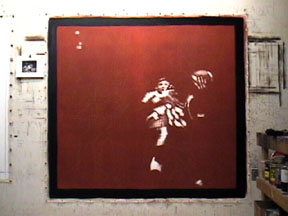
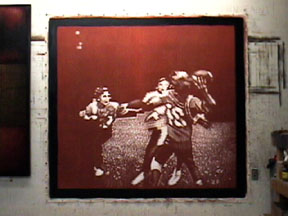
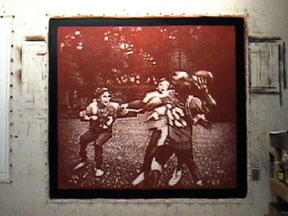
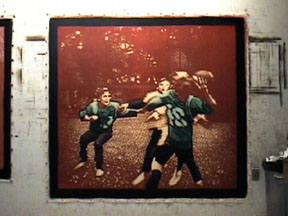
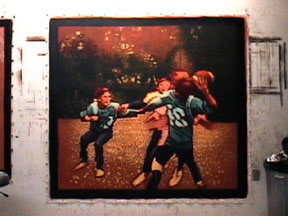
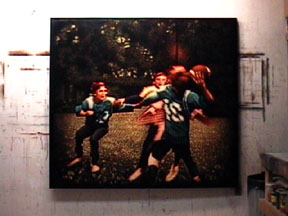
subtractive. All of my paintings are done while stretched on the wall. The first thing that I do is isolate the canvas with an acrylic medium. This medium stabilizes the canvas and prevents it from stretching or shrinking in later stages. Then I mark off the borders of the painting with tape. Using a spackling knife I apply one coat of light molding paste which is sanded down and made smooth. I then brush on one coat of regular molding paste. This too is sanded down but the brush strokes are left intact. Next I roll on one coat of thin yellow toned gesso. This gesso creates both a colored ground and a slightly textured surface. I then apply one coat of red oxide acrylic and one coat of dioxazine purple. The overall affect of these three colors is a dark burgundy onto which the image is then drawn with a water soluble white pencil. Once the surface drawing is complete I begin sanding into the painting. I hand sand the painting using sandpaper in the ranges of 600 to 36 grit to create the image. As I sand into the surface all of the three colors are revealed at different intervals. At this point when the rendering of the image is complete I roll on one coat of gel medium to recreate the textured surface of the gesso. I then apply various coats of transparent acrylic color over the entire painting. This is the most complex part of the process as it involves establishing local color while subtly adjusting the color of both light and shadow. I then sand into these glazes to establish the middle ground values and highlights. Next I isolate the painting with a thin clear acrylic medium and then remove the canvas from the wall to stretch it. Final step is an application of a UV satin varnish to protect the painting. |
|||||
 |
 |
 |
 |
 |
 |
To
see a movie of the process....click
here
|


